Not every loaf is a fail.
What I Was Trying To Do
I've made a couple of pretty good sourdough loaves at this point, so this base wasn't supposed to be anything particularly experimental.
The goal was pretty simple:
Make another good loaf.The Recipe
| Ingredient | Amount |
|---|---|
| King Arthur Unbleached Bred Flour | 550 g |
| Active sourdough starter | 100 g |
| Water | 375 g |
| Salt | 13 g |
Approximately 71% hydration.
The work area was around 78 F
Nothing particularly weird here.
Which is probably why I managed to make it weird anyway.
Mixing
I started with the flour and 300 g of room-temperature water. I mixed it until there was no dry flour. I then mixed the starter with the remaining 75 g of water. I then added the starter mix into the flour mixture and worked the dough by hand for about 10 minutes
It felt a little wetter than what I'm used to, but not enough to worry about.
I covered it and let it rest. After about 30 minutes, I was going to start the stretch-and-folds.
And then, about 15 minutes into that rest, I realized something.
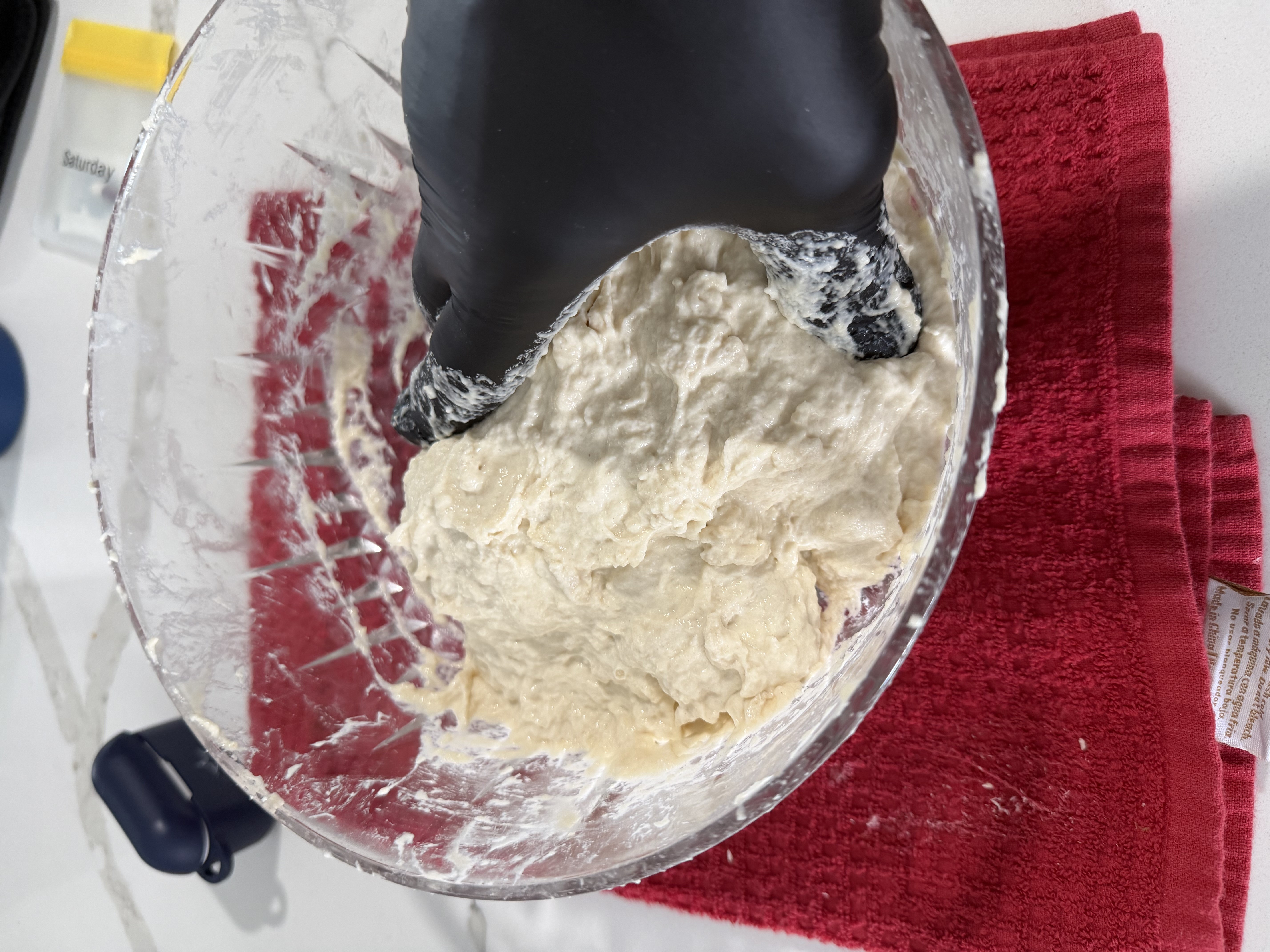
I forgot the salt...
So about 25 minutes after I started mixing the ingredients, I realized what I had done.
I mixed the 13 g of salt with a little water and worked it into the dough.
It wasn't pretty, but the dough seemed to take it reasonably well.
I let it rest for another 30 minutes, then did a series of 4 stretch-and-folds 30 minutes apart.
Things Actually Started Looking Pretty Good
The dough continued to develop nicely.
The kitchen was around 78F, and after roughly 5 hours for bulk (counter) fermenting, the dough had gained a significant amount of volume.
It looked alive.
It felt good.
At this point, I was feeling pretty good about adding the salt after mixing the other ingredients and letting the fermentation run for some time.
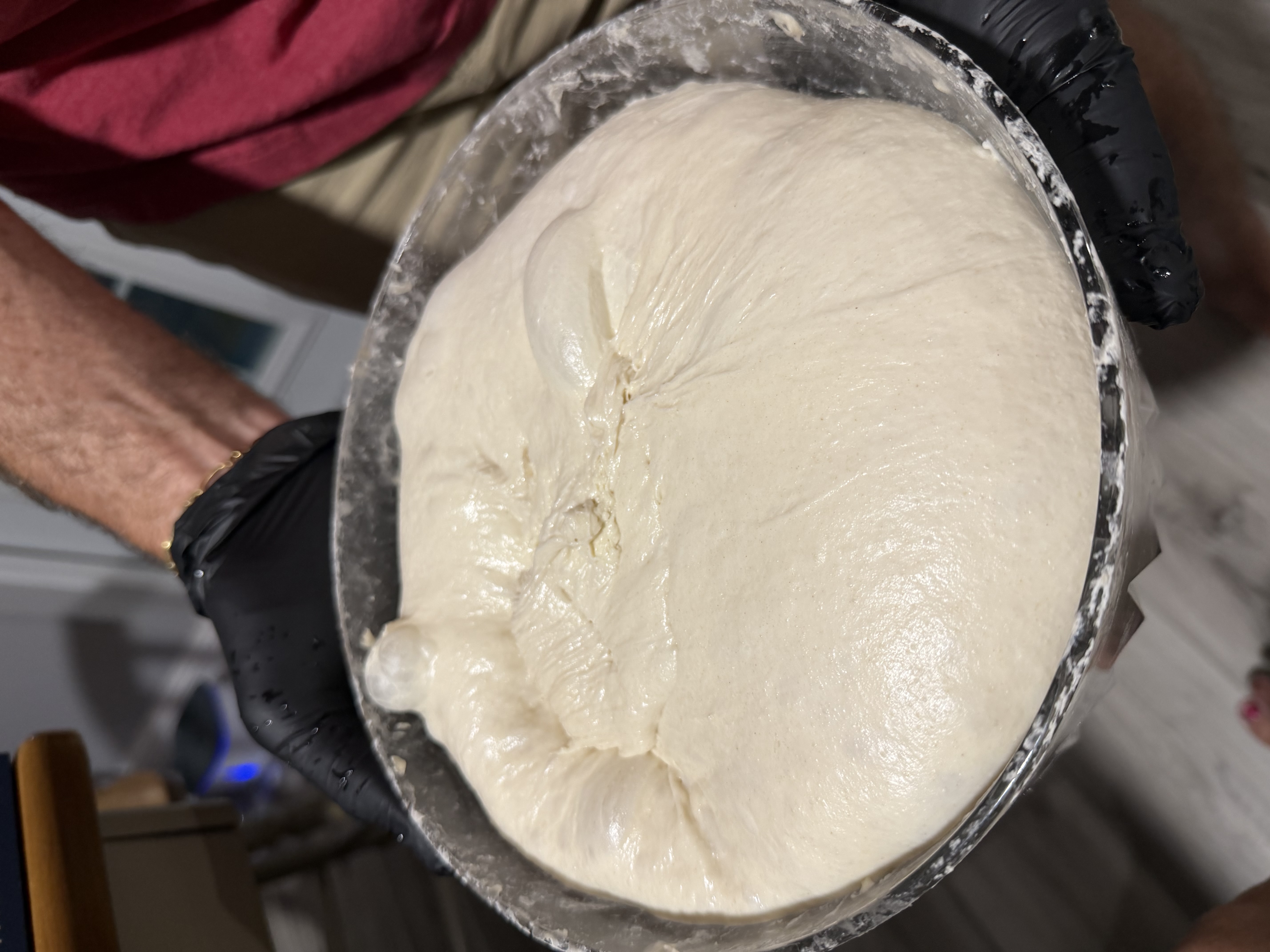
The Plan
Shape the dough.
Put it in the banneton.
Refrigerate (cold proof) for about 11 hours.
Bake.
Simple.
And then life happened.
I got a stomach bug and spend the next day in bed.
The dough stayed in the refrigertor
For 35 hours.
The original plan was 11.
So that's....close
If you round aggressively.
Time to Find Out What Happened
After 35 hours in the fridge, I tood the dough out, scored it, and put it into the Dutch oven.
I had preheated the over and Dutch oven to 450F for about an hour to make sure everthing was thoroughly heated.
The loaf baked covered for 25 minutes.
Then I removed the lid, dropped the oven to 425F, and gave it another 5 minutes to get a little more color on top.
And then...
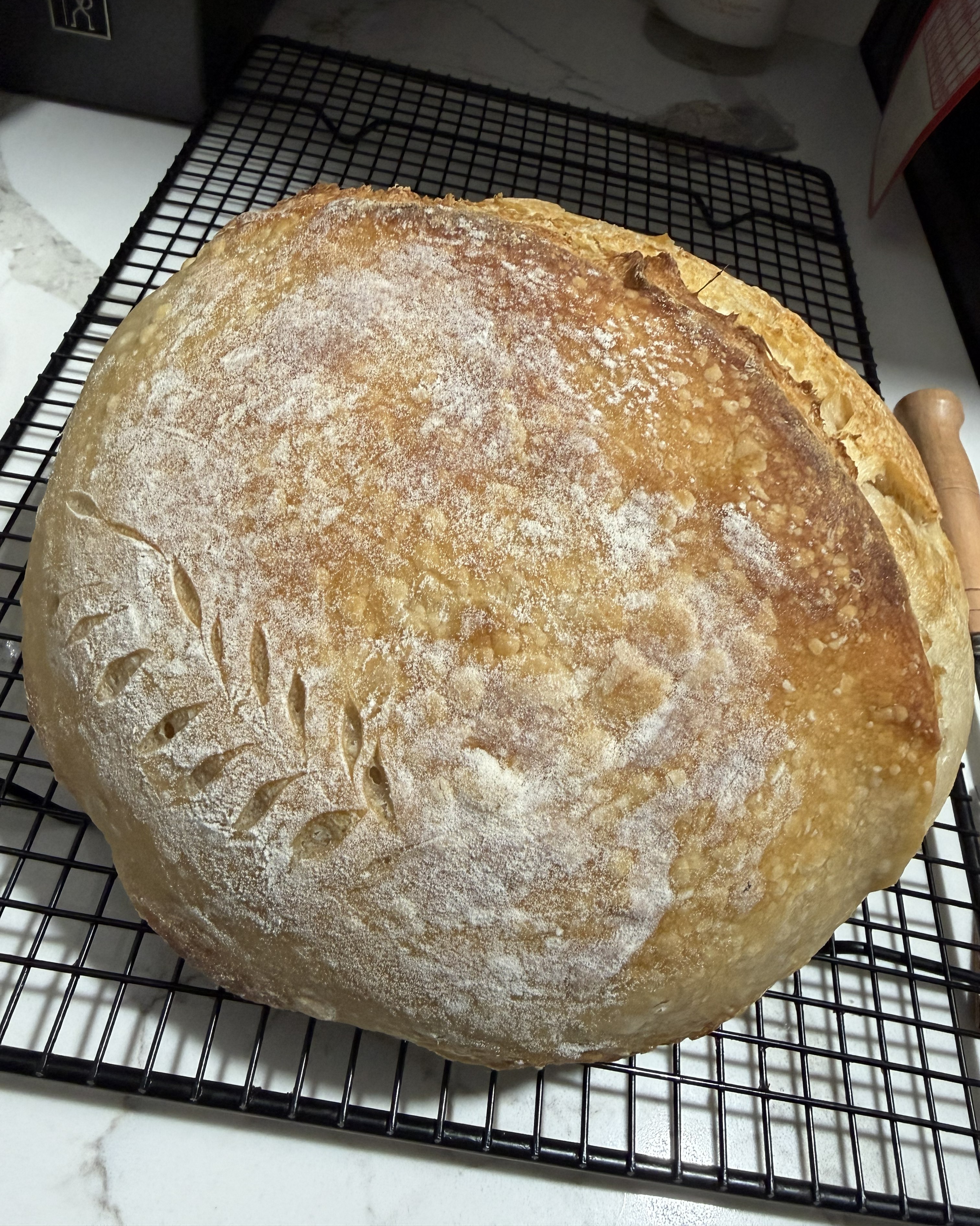
When it came out, the crust had good color and a decent ear. I let it cool (mostly), then cut it open.
The crumb was open, airy, and pretty even. Not perfect — there’s always something I’d tweak — but clearly better than a lot of the earlier attempts. This one felt like progress, considering I initially forgot the salt and the cold fermentation lasted 35 hours. I was expecting more drama when I cut it.
I didnt get it.
What I Learned
My starter seems to be doing its job.
It was active, bubbly, and the dough fermented well.
Forgetting the sale didn't run the bread.
I'm not giong to recommend forgetting salt as a technique.
But the dough recovered.
35 Hours in the fridge didn't kill it.
That's useful information.
It doesn't mean I'm going to start routinely code-proofing for 35 hours, though.
I need to lear how to reproduct this.
This is probably the biggest lesson from this first recorded bake (Bake #001).
One great loaf could be luck.
Repeatedly making great bread is a skill.
That's what I'm after.
What seemed to help
The dough had good strength and a solid rise during bulk. I didn’t rush it. Temperature stayed in a comfortable range the whole time. Nothing dramatic — just the basics lining up better than usual.
What I’ll carry forward
Trust the feel of the dough more than the clock when it looks strong. Keep noting temperatures. And remember that a good loaf is allowed to happen without overthinking it.
Still learning. But this one felt like a step in the right direction.